Start your baby's food journey right with these nutrient-packed first foods recommended by pediatricians
Starting solids is a major milestone, but it can also be confusing. With so many options, what should be on your baby's menu? The key is to offer nutrient-dense foods that support rapid growth and brain development.
Key Takeaways
February 6, 2026
attaullah
Full stack developer
December 25, 2025
Updated February 6, 2026
Iron is critical: Babies' iron stores deplete around 6 months, so prioritize iron-rich foods.
Texture matters: Start with smooth purees (if spoon-feeding) or soft wedges (if BLW).
Variety is the spice of life: Early exposure to diverse flavors can prevent picky eating later.
According to the American Academy of Pediatrics, most babies are ready for solids around 6 months when they can sit up with support and show interest in food. This comprehensive guide will walk you through the top 10 nutrient powerhouses to introduce first.
Research shows that babies who are exposed to 8-10 different foods in the first month of solids are 50% less likely to become picky eaters by age 2. The window of opportunity is now!
Top 10 Nutrient-Packed First Foods
1. Avocado
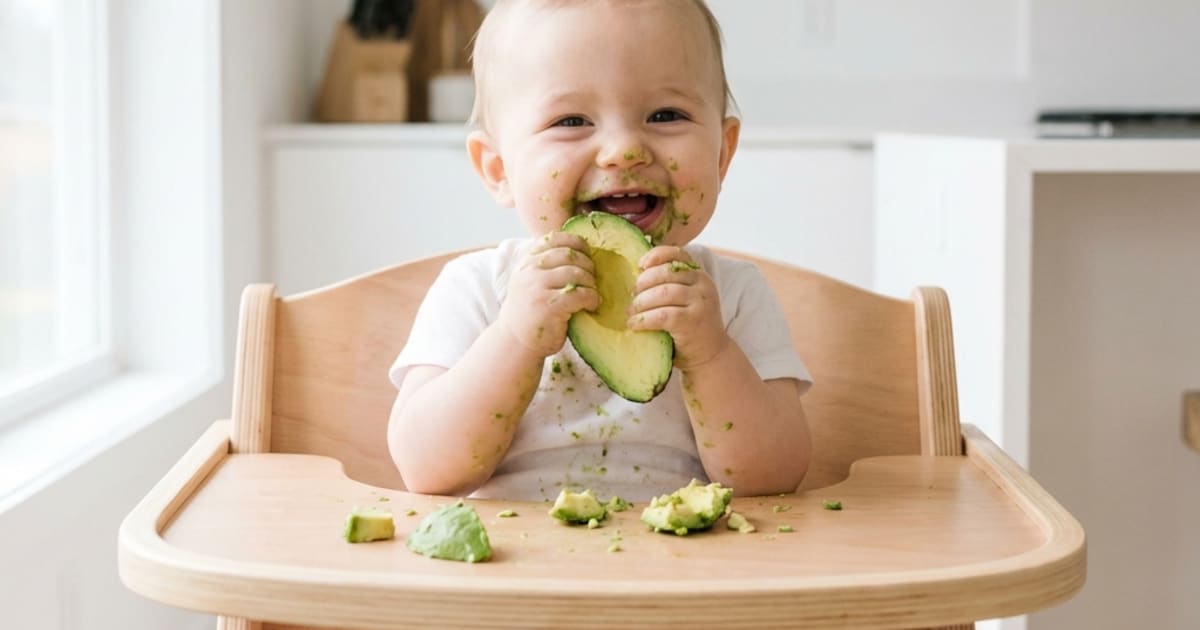
Creamy and packed with healthy monounsaturated fats, avocado helps brain development. Mash it up for a perfect first bite!
Avocados are rich in folate, vitamin K, and potassium. They're also one of the few foods that contain healthy fats essential for myelin formation (the protective coating around brain cells). Simply mash with a fork or offer in thick strips for baby-led weaning.
2. Sweet Potato
Rich in Vitamin A (beta-carotene) for vision and immunity. Its natural sweetness makes it a hit with most babies.
One medium sweet potato provides over 400% of the daily vitamin A requirement. Roast until soft, then mash or cut into wedges. The fiber content also supports healthy digestion.
3. Iron-Fortified Cereal
Oatmeal or barley cereals are gentle on stomachs and provide that essential iron boost.
Mix with breast milk or formula to a thin consistency at first. According to USDA guidelines, iron-fortified cereals should provide at least 45% of the daily iron requirement per serving.
4. Banana
Nature's perfect portable food! Bananas are rich in potassium, vitamin B6, and natural sugars for quick energy.
The soft texture makes them ideal for self-feeding. Slice lengthwise into strips or mash with a bit of breast milk. The resistant starch in slightly green bananas also acts as a prebiotic, feeding healthy gut bacteria.
5. Eggs
A complete protein source with choline for brain development. Scrambled, hard-boiled, or as an omelet—eggs are incredibly versatile.
Don't wait to introduce eggs! Early introduction (around 6 months) may actually reduce the risk of egg allergy by 40% according to recent studies. Always cook thoroughly to avoid foodborne illness.
Pro Tip
Don't be afraid of spices! A dash of cinnamon in oatmeal or mild curry powder on veggies expands your baby's palate early on.
6. Plain Whole-Milk Yogurt
Full of probiotics for gut health, calcium for bones, and protein for growth. Choose unsweetened varieties and add mashed fruit for natural sweetness.
Greek yogurt has double the protein of regular yogurt. The live cultures support a healthy microbiome, which is linked to better immunity and even mood regulation later in life.
7. Lentils & Beans
Plant-based protein and iron powerhouses. Red lentils cook quickly and have a mild flavor that babies love.
Combine with vitamin C-rich foods (like tomatoes or bell peppers) to boost iron absorption. Puree into a smooth consistency or mash for older babies. Lentils also provide folate and fiber.
8. Blueberries
Tiny but mighty! Blueberries are packed with antioxidants that protect developing cells from damage.
Smash them to avoid choking hazards, or cut into quarters for older babies. The anthocyanins (blue pigment) have been linked to improved cognitive function. Mix into yogurt or oatmeal for a nutritional boost.
9. Broccoli
Don't skip the greens! Broccoli provides vitamin C, calcium, and fiber. Steam until very soft and offer as florets (perfect for tiny hands) or puree.
Introducing bitter vegetables early (before 8 months) increases acceptance. Pair with cheese or a drizzle of olive oil to make it more appealing. The sulforaphane in broccoli supports detoxification pathways.
10. Salmon
Rich in omega-3 fatty acids (DHA and EPA) crucial for brain and eye development. Choose wild-caught when possible and ensure it's fully cooked and flaked.
Salmon also provides vitamin D, which is often deficient in breastfed babies. Mix flaked salmon into mashed sweet potato or avocado. Aim for 2 servings of fatty fish per week for optimal brain development.
Introducing Allergens
The latest research from NIH-funded studies has completely changed allergen introduction guidelines. Early exposure is now recommended!
Myth
"Wait until 1 year to introduce peanut butter and eggs."
Fact
Early introduction (around 6 months) often reduces the risk of developing food allergies.
The "Big 9" allergens to introduce early include: peanuts, tree nuts, eggs, milk, soy, wheat, fish, shellfish, and sesame. Introduce them one at a time, waiting 3-5 days between new foods to monitor for reactions.
Important Safety Note
Always consult your pediatrician before introducing high-allergen foods, especially if there is a family history of allergies or if your baby has severe eczema.
Sample Feeding Schedule
Here's a realistic progression for the first month of solids:
Week 1: 1 meal per day, 1-2 tablespoons. Focus on single-ingredient foods (avocado, sweet potato).
Week 3: 2 meals per day, 3-6 tablespoons. Add protein (eggs, lentils).
Week 4: 2-3 meals per day, 4-8 tablespoons. Introduce allergens and expand variety.
Remember: breast milk or formula remains the primary source of nutrition until 12 months. Solids are for practice, exploration, and supplementing iron stores. If you're tracking your baby's growth, our height predictor tool can help monitor developmental milestones.
Conclusion
Eating is a sensory adventure! Let your baby explore messily. Focus on fun and nourishment, and don't worry if more ends up on the floor than in their tummy at first.
Whether you're choosing a culturally meaningful name for your little one or navigating the exciting world of first foods, trust the process. Every baby develops at their own pace, and with patience and variety, you'll raise an adventurous eater!
Free Tools
Find the Perfect Baby Name
Try our smart name finder, combining names, due date calculator, and more.